The First Six Weeks: Building Connection and Teamwork
A new dog does not arrive knowing what an agility jump is or how to follow a course. Those are things we teach, one step at a time. Early training gives your dog a reason to pay attention to you and helps you learn to communicate while moving together.
We use food to lure the dog through an exercise. The lure helps show the dog where to go, while making the experience rewarding. As your dog follows your guidance, they begin learning how your movement relates to the task in front of them.
There is no single weekly timetable that every team must follow. During the first session, we build on what your dog is beginning to understand and keep practicing the parts that still need support.
Start by Learning to Follow the Handler
Before a dog can understand a course, they need to begin understanding how to move with their person. Following a food lure gives them a clear starting point.
At this stage, look for your dog becoming more interested in working with you and more willing to follow your guidance during an exercise. That connection is a foundation you will continue developing throughout agility training.
Introduce Jumps at a Low Height
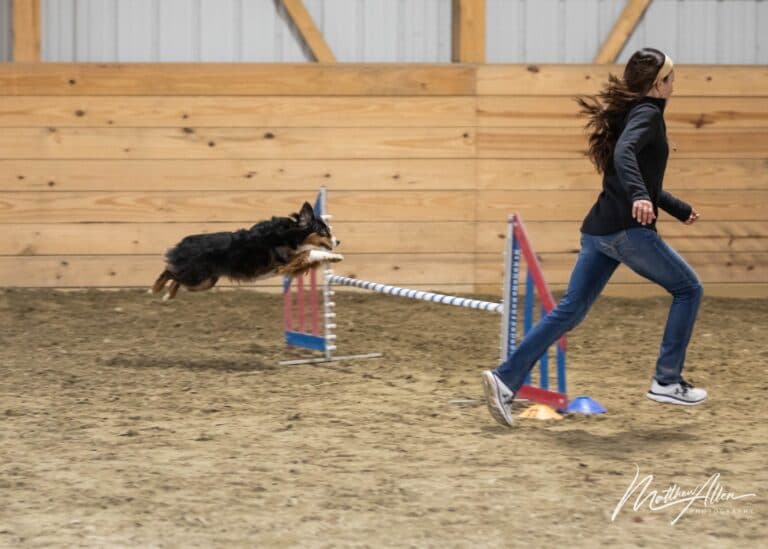
We usually set the jumps low and use food to lure the dog over them. Your dog is learning what the jump means and how to approach it as part of the exercise.
Keeping the jumps low lets us focus on understanding: following the handler, going over the jump, and continuing in the intended direction. Jump height is not the measure of success in an introductory class. A dog can be making meaningful progress while the bars remain low.
Begin Understanding How the Course Fits Together
As dogs become familiar with the exercises, they start learning how to follow their handler through the course work being introduced. They still have help from the food lure and the handler’s guidance.
The important change is that the task begins to make sense. Your dog is learning that your direction helps them find the next part of the exercise. Being guided through familiar work is an early learning step; independent, reliable course running develops through continued training.
What Might You See After Six Weeks?
By the end of an initial session, we hope to see a dog who wants to work with their handler. Depending on their starting point and progress, you may notice:
- More willingness to engage with you during class.
- A growing understanding of how to follow you when you use a food lure.
- Greater familiarity with low agility jumps and what you are asking the dog to do.
- The beginnings of teamwork as you guide your dog through an exercise.
- A clearer sense, as a handler, of how to help your dog understand the task.
These are goals to work toward, rather than a checklist every dog must complete in six weeks. Your dog may still need plenty of guidance. Continuing to use low jumps and practice familiar exercises can be exactly what your team needs.
Why Weave Poles Take Longer to Learn
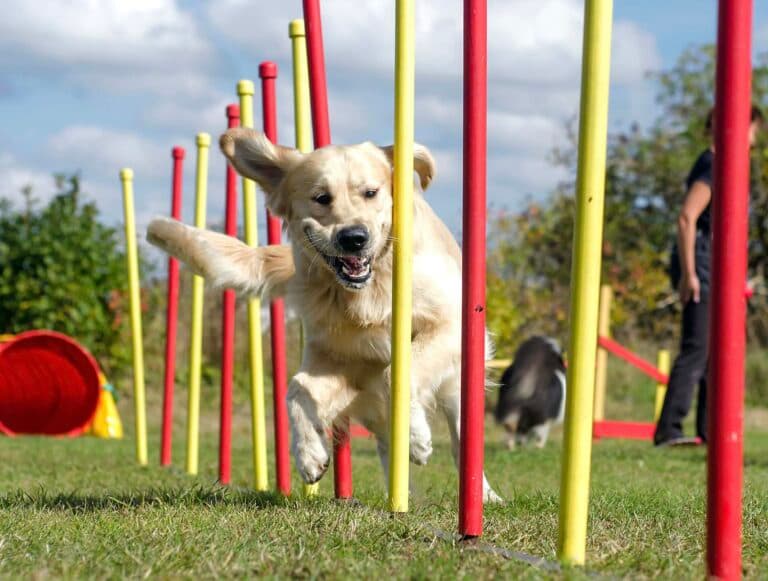
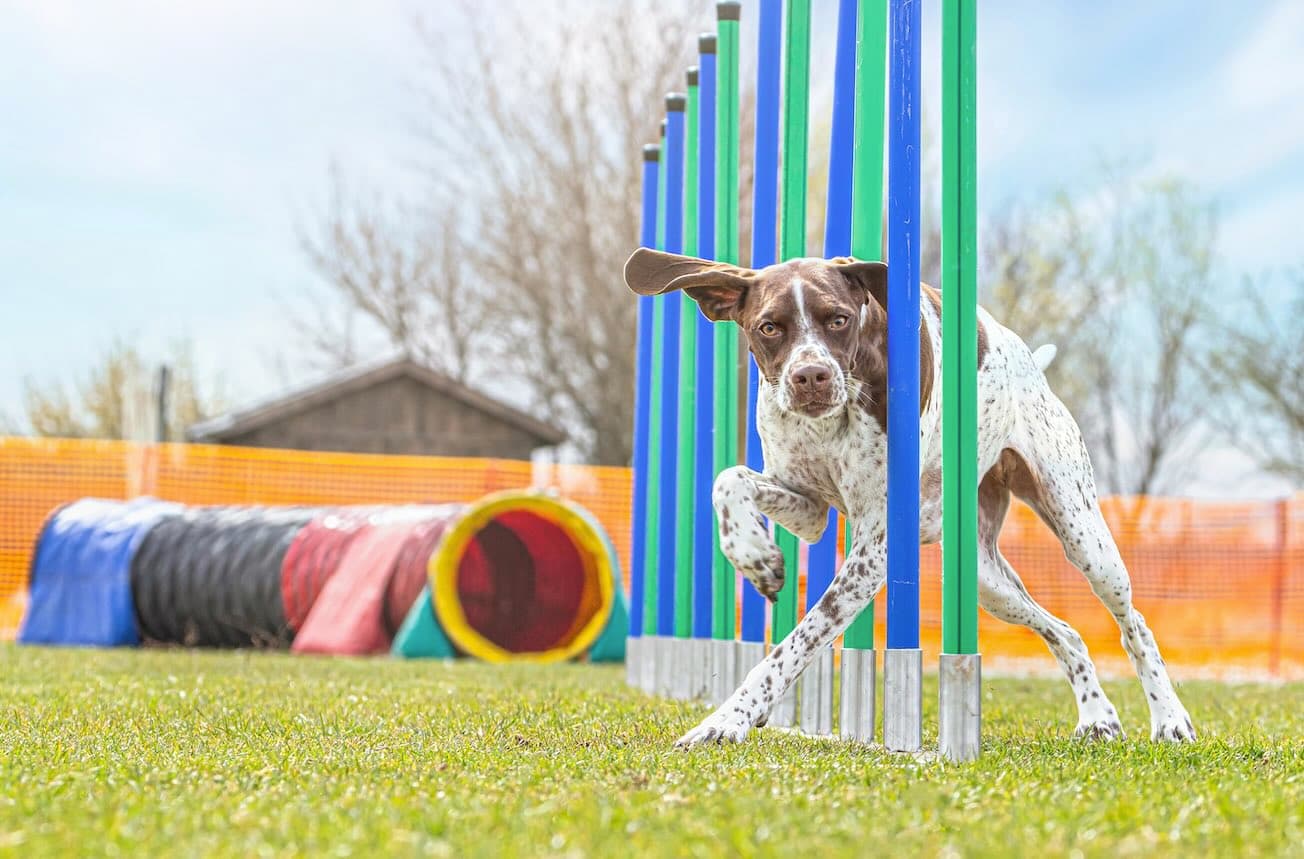
Weave poles are one of the most demanding parts of agility to teach. At Agility Playhouse, we consider them the hardest obstacle to teach, and we expect the learning process to take time. They are not a skill we expect a beginner dog to master in one six-week session.
We use open channel weave poles together with weave pole guards. The poles are arranged in two offset rows, leaving a pathway between them, and the guards help guide the dog along the intended path. We use food to lure the dog through this setup as they begin learning where to go.
Over time, we move the rows closer together, gradually narrowing the channel as the dog learns the exercise. The channel setup and guards work together to support that learning process.
This develops gradually through continued training. Introducing the channel is an early step; reliably completing weave poles is a much longer learning process. We do not attach that progression to a promise that the poles will be closed by a particular week.
See channel weaves, weave guides, and weave entries explained in our agility glossary
What Happens After the First Session?
Agility is a continuing class at Agility Playhouse. Each six-week session gives your team more opportunities to build on earlier learning. You keep developing your connection, your dog’s understanding of the equipment, and your ability to guide them through the course.
Different skills develop at different rates. Your dog may become familiar with low jumps while still needing substantial help with weave pole training. That is a reason to work on each skill at the appropriate stage, rather than expect every obstacle to come together at once.
Talk with your instructor about what has improved and what to focus on next. The useful question is what your dog understands now and which step will help that understanding grow.
How Long Does It Take to Be Ready for Competition?
Competition is a separate, longer-term goal. Wanting to work with the handler, following a food lure, and beginning to understand jumps are valuable foundations. A competition course asks for much more developed skills and teamwork.
There is no competition deadline attached to completing an introductory session. Readiness depends on how the team’s skills develop through continued training, including the obstacles that take longer to teach, such as weave poles.
You can also continue agility simply because you and your dog enjoy learning together. Competing is optional; building your partnership is part of every stage.
Look up trial, qualifying run, and other competition terms in the agility glossary
Starting Agility in Rochester or Acushnet
Agility Playhouse offers indoor training in Rochester and outdoor training in Acushnet, Massachusetts. If you are considering a first class, tell us about your dog and any previous training. We can help you find a starting point and explain what to expect.
Keep exploring
Continue Your Agility Journey
Explore our dog agility classes See the training paths available for new and experienced teams.
Meet Agility Playhouse Learn about our trainer, approach, and experience.
Ask about current classes Tell us about your dog and where you would like to begin.